Source anti counterfeiting offset printing ink for documents, packaging, and security labels
Compare 30 verified listings for anti counterfeiting offset printing ink with features like solvent and UV drying, available in multiple colors and packaging options from Guangdong suppliers.
Key considerations
Products List


Comprehensive Sourcing Guide
Strategic Sourcing Guide for Anti-Counterfeiting Offset Printing Ink
Understanding the Technical Landscape of Security Inks
The procurement of anti-counterfeiting offset printing ink requires a precise understanding of the diverse chemical and physical properties that define security solutions. Unlike standard commercial inks, these products are engineered to provide specific authentication features that are difficult to replicate. Based on current market observations, the technology landscape is segmented by drying mechanisms, color-shifting capabilities, and underlying chemical compositions. Buyers must distinguish between Solvent-Based Inks, which often utilize oxidative polymerization drying, and UV Inks that rely on penetration drying or specific curing processes. The visual output is equally critical; observed product attributes indicate a wide spectrum of color options ranging from standard process colors like Cyan, Magenta, Yellow, and Black to specialized security hues such as Rubin red, Warm red, and Peacock green. Furthermore, advanced formulations offer invisible properties, shifting from colorless to yellow under long-wave light or to red under short-wave illumination, providing a critical layer of verification for high-value documents.
The functional performance of these inks is often tied to their application method. While the core keyword focuses on offset printing, the supply chain also supports flexographic and screen printing methods. The drying mechanism is a primary differentiator; some products utilize oxidative polymerization, while others depend on penetration drying. This distinction impacts the drying time on the press and the final adhesion to various substrates. Buyers should verify the specific drying requirement for their production line, as a mismatch can lead to smudging or poor registration. Additionally, the component makeup varies significantly, with some formulations relying on pigments and others on connection materials, directly influencing the ink's opacity and resistance to chemical solvents.
Critical Technical Specifications and Performance Metrics
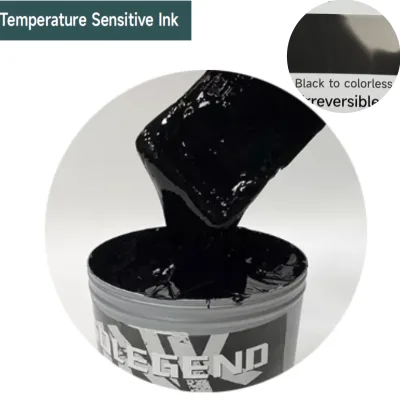
When evaluating potential suppliers, the technical specifications provided in product data sheets serve as the primary verification tool. A robust sourcing strategy demands a granular review of these metrics to ensure compatibility with existing printing infrastructure. Key specifications to scrutinize include the model number, which often indicates the specific ink technology, such as "Temperature Sensitive Ink Black" or "UV Invisible Ink." The physical form factor is also essential; observed data suggests packaging variations ranging from single items to bulk containers like 1kg cans or 12kg boxes. The single package size can vary drastically, from compact 1x1x1 cm units to larger 10x10x10 cm boxes, which directly influences logistics planning and storage requirements.
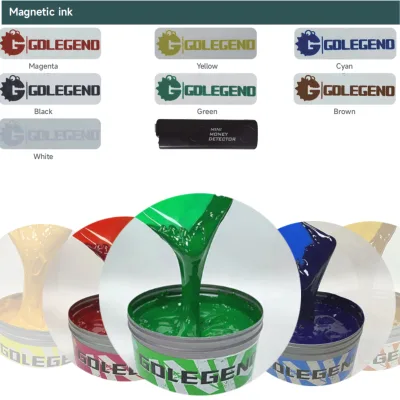
Performance attributes are equally vital for ensuring the longevity and security of the printed output. Buyers should look for explicit claims regarding quality, such as "High Quality" or "High," and specific functional features like "Anti-counterfeiting" and "100% Safe." The color consistency is a major concern in offset printing; the market offers a diverse palette including Brown, Magenta, Yellow, Cyan, Black, Green, and White, as well as specialized security colors. The wavefront or wavelength specification is particularly important for invisible inks, where short-wave 265nm or double-wave capabilities are noted. These specifications determine the equipment required for verification, such as UV lamps or specific lighting conditions.
Furthermore, the physical weight of the product is a critical factor for shipping calculations. Observed gross weights range from 0.001 kg for small sample units to 1.0 kg for standard packaging. This variance highlights the need for precise inventory management. The application scope is another technical consideration; these inks are specifically designed for advanced anti-counterfeiting documents, implying a need for high precision and resistance to tampering. The flexibility of the ink, noted as "Flexion" in some product attributes, ensures that the printed security features remain intact even when the substrate is bent or folded, a common requirement for packaging and currency applications.
Compliance, Certification, and Regulatory Verification
Navigating the regulatory landscape for anti-counterfeiting inks requires a cautious approach, as the market contains a mix of standardized and proprietary products. While general industry standards such as ISO 2846 are often referenced in the broader ink sector, buyers must not assume that every listed product automatically complies with specific certifications unless explicitly stated in the product documentation. The provided data does not confirm specific certification statuses for all items, necessitating a verification protocol where the buyer requests current compliance documents from the supplier.
Compliance checks should focus on the chemical composition and safety data. Attributes like "100% Safe" suggest a focus on non-toxic formulations, but this should be corroborated with Material Safety Data Sheets (MSDS) or equivalent documentation. The origin of the product is a significant factor in regulatory compliance; observed data indicates that a primary source of these inks is Guangdong, China, with some general references to "China" as the place of origin. Buyers importing these products into regions with strict chemical regulations, such as the European Union or North America, must verify that the ink formulations meet local VOC (Volatile Organic Compounds) limits and hazardous material restrictions.
Additionally, the warranty terms provide a layer of assurance regarding product reliability. Some suppliers offer a 1-year warranty, which can be a useful metric for evaluating the confidence of the manufacturer in their product's stability. However, warranties should be viewed as a commercial term rather than a technical certification. Buyers should also investigate the "Quality" claims, ensuring they are backed by third-party testing results rather than internal assertions. The absence of specific standard numbers in the provided text for certain products means that the buyer must explicitly request the relevant standard numbers (e.g., ISO, ASTM, or local equivalents) to ensure the ink meets the necessary regulatory thresholds for their specific application.
Cost Drivers and Procurement Economics
The economics of sourcing anti-counterfeiting offset printing ink are influenced by a complex interplay of factors, including volume, formulation complexity, and logistics. The observed price range in the market is extensive, spanning from $0.17 to $499 USD. This wide variance is not merely a reflection of brand value but is driven by the specific technology embedded in the ink. Standard solvent inks may occupy the lower end of the spectrum, while specialized UV invisible inks or temperature-sensitive formulations with complex color-shifting properties command premium prices.
Minimum Order Quantities (MOQs) are another significant cost driver. The market data indicates an MOQ range from 1 unit to 1000 units. For small-scale operations or prototyping, the ability to order single items or small batches (1KG) is crucial for managing cash flow and minimizing inventory risk. Conversely, large-scale production runs can leverage higher volume discounts, but the buyer must balance this against storage costs and the shelf life of the product. The selling units are typically listed as "Single item," suggesting that the market is flexible regarding batch sizes, which is beneficial for diverse procurement needs.
Logistics and shipping costs also play a substantial role in the total cost of ownership. The observed delivery times range from 5-7 working days to 7-15 days, depending on the supplier and the destination. Shipping methods vary, including air freight via UPS, DHL, and FedEx, as well as sea shipping for larger volumes. The single gross weight of the product, ranging from 0.001 kg to 1.0 kg, directly impacts the shipping cost per unit. Buyers should calculate the landed cost, which includes the product price, shipping fees, and any applicable tariffs, rather than focusing solely on the unit price. Payment terms, such as Palpal, TT, or Bank Transfer, also affect the financial flexibility of the procurement process, with some suppliers requiring upfront payment while others may offer credit terms for established buyers.
Typical Applications and Use Case Analysis
The versatility of anti-counterfeiting offset printing ink allows it to be deployed across a wide array of high-security applications. The primary use case identified is for advanced anti-counterfeiting documents, which includes currency, passports, identity cards, and official certificates. In these contexts, the ink must provide immediate visual verification and resistance to forgery techniques. The color-shifting capabilities, such as the transition from colorless to orange or from yellow to red under specific wavelengths, are particularly effective for document authentication.
Beyond official documents, these inks are increasingly used in product packaging and brand protection. The "Anti-counterfeiting" feature is essential for pharmaceuticals, luxury goods, and electronics, where brand integrity is paramount. The ability to print in various colors, including Black, Rubin red, and Peacock green, allows for seamless integration into existing packaging designs without compromising the security features. The "Flexion" performance ensures that the security markings remain visible and intact even when the packaging is folded or manipulated, a critical requirement for consumer goods.
Temperature-sensitive inks offer another unique application, particularly for products that require verification of storage conditions or handling history. These inks can change color based on temperature fluctuations, providing a visual record of the product's journey through the supply chain. The "Magnetic Ink" specification also points to applications in banking and financial instruments, where magnetic encoding is used for machine-readable verification. The choice of ink type, whether Solvent, UV, or Magnetic, should be aligned with the specific security requirements of the application, ensuring that the chosen solution provides the necessary level of protection against counterfeiting and tampering.
Supplier Evaluation and Quality Assurance Protocols
Selecting a reliable supplier for anti-counterfeiting inks requires a rigorous evaluation process that goes beyond price and lead time. The first step is to verify the supplier's ability to meet the specific technical requirements of the project. Buyers should request detailed product data sheets that confirm the ink type, drying mechanism, and color specifications. The "Brand Name" and "Model Number" are critical identifiers; for instance, distinguishing between "GDLEGEND" branded products and generic offerings can help in assessing the level of quality control and support provided.
Quality assurance protocols should be established early in the procurement process. Buyers must verify the "Quality" claims by requesting sample testing results or third-party certifications. The "Warranty" period, such as the 1-year term observed in some listings, can be an indicator of the supplier's confidence in their product. However, buyers should also inquire about the supplier's track record in delivering consistent quality over time. The "Delivery" lead time, ranging from 5-7 to 7-15 days, should be consistent with the supplier's historical performance to avoid production delays.
Logistics and packaging are also key indicators of supplier reliability. The "Packing" method, whether "Carton Packing" or "Packed with boxes," should be robust enough to protect the ink during transit. The "Single package size" and "Single gross weight" should be accurately reported to ensure that the logistics plan is feasible. Additionally, the "Shipping" options provided by the supplier, including UPS, DHL, FedEx, and sea shipping, should align with the buyer's urgency and budget constraints. A supplier that offers multiple shipping options and clear communication channels is more likely to provide a satisfactory procurement experience.
Long-Term Procurement and Supply Chain Resilience
Establishing a long-term procurement strategy for anti-counterfeiting inks involves more than just securing a single purchase; it requires building a resilient supply chain that can adapt to changing market conditions. The "Customization" availability noted in the product attributes suggests that suppliers may be willing to tailor formulations to meet specific security needs. Buyers should explore these customization options to ensure that the ink meets the unique requirements of their products, such as specific color shifts or drying times.
Supply chain resilience is also dependent on the supplier's ability to maintain consistent inventory levels. The "Delivery" lead times observed in the market can vary, and buyers should plan for potential delays by maintaining a buffer stock. The "Standard" packaging, such as 1kg/can or 12kg/box, should be considered when planning inventory levels to optimize storage and handling. Furthermore, the "Payment" terms, including TT and Bank Transfer, should be negotiated to ensure financial flexibility and risk mitigation.
Finally, buyers should consider the long-term compatibility of the ink with their printing equipment and substrates. The "Printing Type" and "Printing Method" specifications must align with the buyer's existing infrastructure to avoid costly equipment upgrades. Regular quality audits and performance reviews should be conducted to ensure that the ink continues to meet the required security standards over time. By focusing on these long-term considerations, buyers can secure a reliable supply of high-quality anti-counterfeiting inks that protect their products and brand integrity for years to come.
FAQs
What drying mechanisms are available for anti counterfeiting offset printing ink?
Available drying mechanisms include oxidative polymerization and penetration drying. Oxidative polymerization is typical for solvent-based inks, while penetration drying is used for UV inks. Buyers must verify the specific mechanism required for their printing line to ensure proper adhesion and drying time.
Which color options are available for security ink in offset printing?
Colors range from standard process hues like cyan, magenta, yellow, and black to specialized security shades such as rubin red and peacock green. Invisible options shift from colorless to yellow or red under specific light waves. This variety supports diverse branding and authentication needs.
Can I customize the ink specifications for my anti counterfeiting documents?
Customization is available for specific product formulations. Buyers can request tailored features like temperature sensitivity or magnetic properties. However, minimum order quantities may apply, and specific model numbers like TDDI-UV indicate distinct customization capabilities within the product line.
What is the typical lead time for delivery of this ink?
Delivery times typically range from 5 to 15 working days depending on the supplier and product type. Some items ship within 5-7 working days, while others may take up to 15 days. Shipping methods include air freight via UPS, DHL, or FedEx, as well as sea shipping.
How does the packaging size vary for different ink types?
Packaging sizes vary significantly, ranging from compact 1x1x1 cm units to larger 10x10x10 cm boxes. Standard units often come in 1kg cans or 12kg boxes. The single gross weight can be as low as 0.001 kg or up to 1.0 kg, affecting storage and logistics planning.
What is the minimum order quantity for purchasing this ink?
Minimum order quantities range from 1 unit to 1000 units depending on the supplier and product. Some items allow single item purchases, while others may require bulk orders. The specific MOQ is often tied to the selling unit and the customization level requested by the buyer.
Which features ensure the anti-counterfeiting quality of the printed output?
Key features include anti-counterfeiting capabilities, 100% safety claims, and high quality assurance. Specific performance metrics like flexion ensure the ink remains intact when the substrate is bent. Invisible inks also provide verification through color shifts under short-wave or long-wave light.